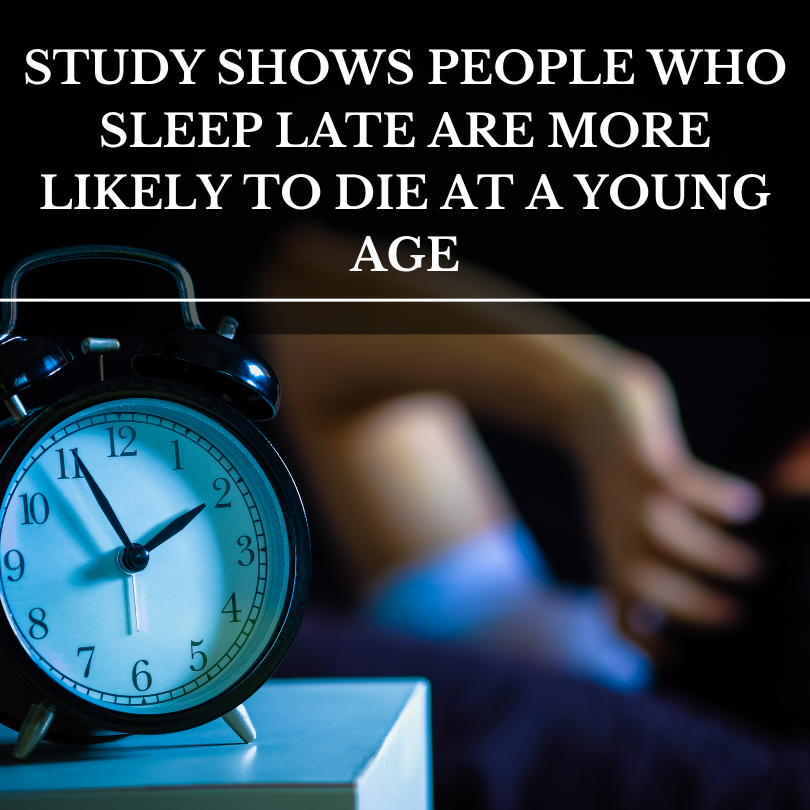
You already know late nights leave you groggy the next day. What’s less obvious is what they’re doing to your body over months and years — your metabolism, your blood pressure, even how long you’re likely to live.

Research increasingly points to sleep as one of the biggest levers on lifespan, right up there with smoking. Here’s what actually happens when you consistently sleep late, and where the line is between “night owl” and genuinely harmful.

Have a Hard Time Waking Up? Check out this Wake Up Light Sunrise Alarm Clock That Is Great For The Whole Family.

As an Amazon Associate, we earn from qualifying purchases. This post contains affiliate links.

If I Sleep Late: What Really Happens to Your Health and Longevity

Staying up late doesn’t just cost you the next morning — it may be costing you years. A 2026 analysis from Oregon Health & Science University, which tracked sleep patterns across the U.S. from 2019 to 2025, found that getting less than seven hours a night was a stronger predictor of shorter life expectancy than diet or exercise. Only smoking ranked worse.

So if you’re a chronic night owl, the question isn’t just “will I be tired tomorrow” — it’s what late nights are doing to your body over years, not hours.

Navigating the Potential Consequences

Late sleep isn’t a single, uniform habit — its effects depend heavily on why you’re staying up. A night owl who consistently gets 7-9 hours of good-quality sleep starting at 2 a.m. is in a very different position than someone who’s sleep-deprived because late nights eat into total sleep time. The research bears this out: chronotype (whether you’re naturally a morning or evening person) matters less for health outcomes than whether you’re actually getting enough restorative sleep.

Health Ramifications

The health risks tied to late, insufficient sleep are well-documented and significant. The OHSU study mentioned above found inadequate sleep was a stronger predictor of shorter life expectancy than diet or exercise — trailing only smoking. Other research links chronic short sleep to:

  • Weight gain and visceral fat — Mayo Clinic research found sleep-deprived participants who slept only 4 hours ate roughly 350 more calories the next day, and the excess was more likely to be stored as inflammatory abdominal fat rather than under the skin.
  • Higher blood pressure, both day and night
  • Increased cardiovascular risk, particularly pronounced in men sleeping under 5 hours
  • Impaired immune function, even after a single night of poor sleep

If your late nights are also restless ones, the problem might not be timing at all — it could be your pillow. Poor neck and shoulder support is one of the most common, overlooked reasons people wake up throughout the night without realizing why.

The Coop Home Goods Crescent Pillow is built for side and back sleepers, with an adjustable fill that lets you dial in support instead of guessing. It’s a small fix that can meaningfully improve sleep quality — which, as the research above shows, matters more than exactly what time you go to bed.

Holistic Lifestyle Considerations

Late nights rarely happen in isolation. They tend to cluster with other habits — late meals, alcohol, screen time, skipped workouts — that compound the effects on their own. If you’re evaluating your own late-night habits, it’s worth separating the sleep timing itself from these secondary behaviors, since they’re often the bigger driver of health impact.

Genetics and Chronotype

Some people are genuinely wired to be night owls — this is a real, heritable trait tied to circadian rhythm genes, not just a bad habit. But being a night owl in a world built around 9-to-5 schedules often creates “social jetlag,” where your biological clock and your actual schedule are misaligned. That mismatch, more than the late bedtime itself, is what drives a lot of the negative outcomes.

For night owls dealing with social jetlag, a sunrise alarm clock can help ease that mismatch by simulating a natural sunrise instead of jolting you awake.

It also doubles as a white noise machine at night — useful if you’re trying to build a more consistent sleep-wake schedule rather than fight your chronotype outright.

Quality and Consistency Over Timing

The clearest finding across sleep research: consistency matters more than the clock. Going to bed at 2 a.m. and waking at 10 a.m. every day is metabolically healthier than an erratic schedule that swings between early and late nights. Irregular sleep-wake times disrupt circadian rhythm regardless of your average sleep duration.

The Bottom Line

If you’re a natural night owl who consistently gets 7-9 hours of quality sleep on a stable schedule, the evidence doesn’t suggest you’re doing lasting harm. The real red flags are: consistently under 7 hours, an erratic schedule, or a persistent mismatch between your body’s clock and your daily obligations. If any of those describe you, that’s the thing worth fixing — not necessarily your bedtime itself.

Affiliate Disclosure: MyUnboundedLife.com is a participant in the Amazon Services LLC Associates Program, an affiliate advertising program designed to provide a means for sites to earn advertising fees by advertising and linking to Amazon.com. As an Amazon Associate, we earn from qualifying purchases at no additional cost to you. Product prices and availability are accurate as of the date/time indicated and are subject to change.